
Camera Shy? How to Feel Confident During Your Headshot
Dreading your headshot because you're camera shy? Compassionate guide to feeling confident and looking natural. You'll actually enjoy it.
I hear it at least once a week: “Matthew, I have to warn you—I’m terrible in photos.” Or “I hate being photographed.” Or my favorite that I have gotten: “Can you just Photoshop me into looking like someone else?”
Here’s what I tell every camera-shy person who walks into my studio: you’re not alone. In fact (and this might surprise you), the majority of people I photograph feel some level of anxiety about being in front of the camera. Whether you’re an Attorney or an Entrepreneur, camera anxiety is completely normal. I would say, it would be a strange shoot if I didn’t hear something about not knowing what to do in front of the camera or avoiding it all together.
The good news? Confidence getting your photo taken isn’t something you’re born with—it’s something we can build together.
Is It Normal to Feel Nervous Before a Headshot Session?
Yes — most people feel some level of anxiety before a headshot session. You’re not alone, and it doesn’t mean you’ll get bad photos. A good photographer knows how to work with nervous clients and will guide you through the entire process.
Let’s start with the truth: professional headshots feel awkward at first. You’re standing in front of a stranger with a camera pointed directly at your face, being asked to “look natural” (which is probably the least natural situation imaginable).
Maybe you just cringe every time you see yourself in photos. Maybe you’re convinced you don’t photograph well. Maybe you’ve had a bad experience with photography in the past that left you feeling self-conscious.
All of this is valid. And all of this is workable.

Why Do I Look Awkward in Photos?
Camera anxiety typically stems from a few common sources. First, there’s the vulnerability factor—being the sole focus of attention feels exposing (especially if you’re used to being behind the scenes). Second, there’s the control issue—you can’t see what the camera sees, which creates uncertainty about how you actually look.
Then there’s the pressure. You know these images will represent you professionally (sometimes for years), and that weight can feel overwhelming.
Here’s the reality: your photographer can’t eliminate all of this anxiety for you. What we can do is create an environment where you feel supported, give you techniques that actually work, and help you understand what’s happening throughout the process. But the mental work? That’s a partnership. Once you see how good the photos look, then you will unederstand there isn’t much to worry about.
How Can I Prepare Mentally for a Headshot Session?
The best headshot sessions (typically) start before you even arrive at the studio. Here are a few things that genuinely help:
Reframe the experience. Instead of thinking “I have to get my headshot taken,” try “I’m investing in how I present myself professionally.” Small shift, big difference.
Remember the photographer’s job. My job isn’t to make you look like someone else—it’s to capture you at your best. That means finding angles that work for you, lighting that flatters, and moments where you look like the best version of yourself.
Set realistic expectations. There will probably be some photos you see that you don’t love. That is just a part of the process. You only need a few great shots. The goal isn’t perfection (not possible)—it’s authenticity in your final images.
How Do I Relax During a Headshot Session?
Once you’re in the session, here’s what tends to help the most:
Communicate with your photographer. If you’re feeling anxious, say so. If something isn’t working, speak up. Many photographers (myself included) would much rather adjust our approach than have you suffer through something that’s making you uncomfortable. More information is always better.
Focus on your breath. When we’re nervous, we hold our breath—which makes us look tense. Take a few deep breaths before you start shooting. It sounds basic (because it is), but it genuinely helps your shoulders relax and your expression soften.
Think about something real. Sometimes it makes sense to think about something that makes you feel competent or content. Maybe it’s a recent professional win. Maybe it’s your dog. Maybe it’s your upcoming vacation. Your photographer might ask you questions or tell stories to evoke natural expressions—go with it.
Move a little. Standing completely still makes everyone look stiff. Small movements—shifting your weight, adjusting your posture, turning your shoulders slightly can help you look more natural. Your photographer will guide you through this. For more on body language, see my article on looking natural and confident in your headshot.
Trust the process. You can’t see what the camera sees, which is uncomfortable. But your photographer can. If we’re saying “that’s great” or “perfect, hold that,” we mean it. (We’re not just being nice—we’re trying to get you out of there with great images as efficiently as possible.)
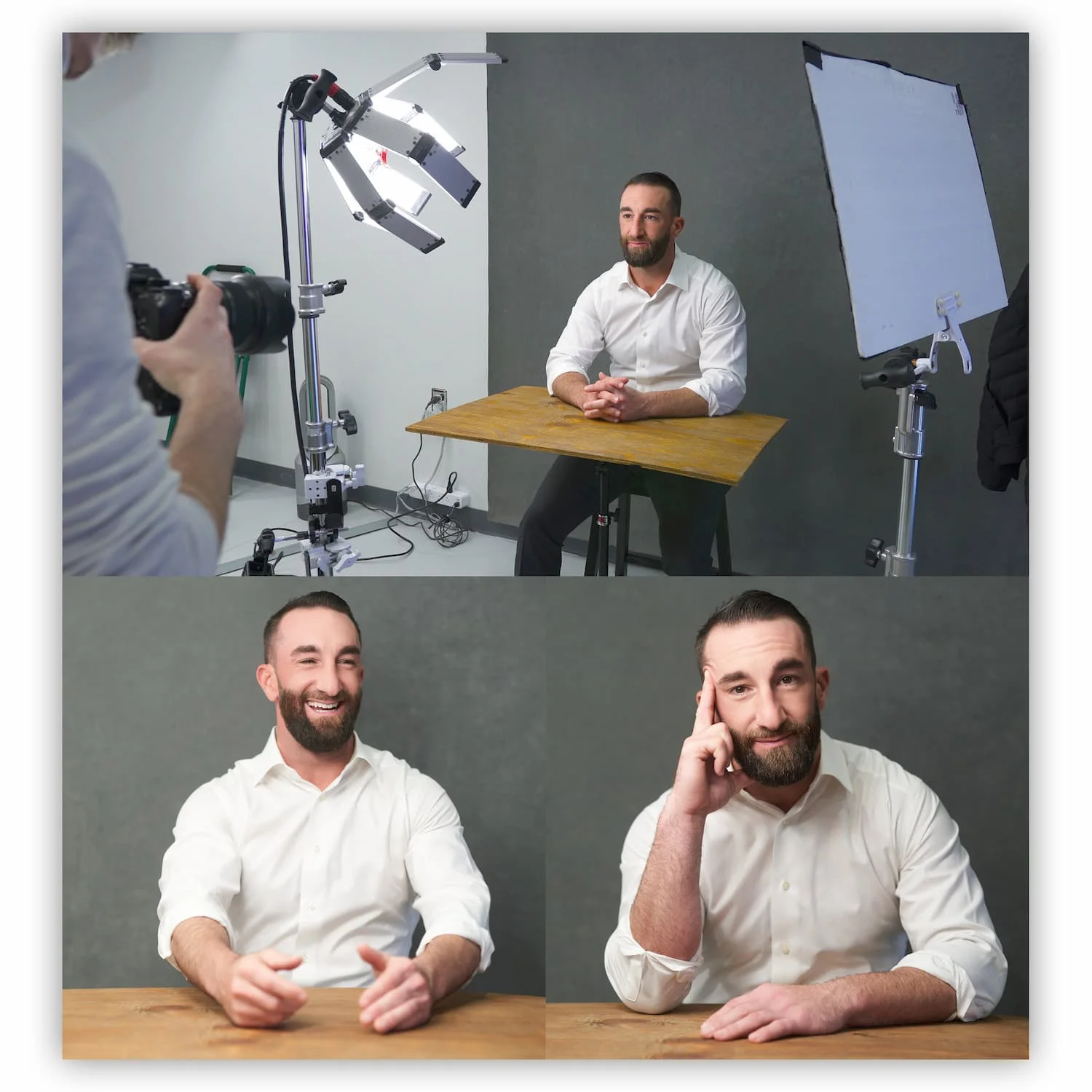
Can You Actually Enjoy Getting Your Headshot Taken?
Here’s a mindset shift that helps: this isn’t about vanity. It’s about professional representation.
Your headshot often makes the first impression before you ever meet someone. A confident and approachable looking headshot isn’t superficial—it’s strategic. You’re not being vain by caring about how you’re represented; you’re being smart.
Another shift: let go of comparing yourself to others. Your colleague might be naturally photogenic (lucky them), but that doesn’t mean you can’t get a great headshot. It just means your session might require a slightly different approach—maybe different angles, different lighting, or a different coaching style. That’s why professional headshot photographers exist.
Finally: give yourself permission to feel awkward. Camera anxiety doesn’t magically disappear the moment the session starts (sometimes it does, but usually it takes a few minutes to settle in). That’s normal. The first dozen shots are often just warm-up. By the time we’re halfway through, most people start to relax.
What Happens After Your Headshot Session?
Here’s what typically happens after your session: you’ll review the images (often 20-40+ shots, depending on your photographer’s process) and select your favorites.
This is where many camera-shy professionals get anxious all over again. A few things to keep in mind:
You’ll probably be your harshest critic. Chances are, the images you think are “terrible” are actually fine. Ask a trusted friend or colleague for a second opinion if you’re struggling. Your photographer can also give their input. A lot of my clients ask me for my opinion as we go through the images.
Look for approachability, not perfection. The best headshot isn’t necessarily the one where you look the most polished—it’s the one where you look like yourself on a good day. Approachable, confident, present.
Consider the context. Where will this headshot be used? LinkedIn? Your company website? A conference bio? Different contexts sometimes call for slightly different vibes (though honestly, a great headshot works across most platforms).
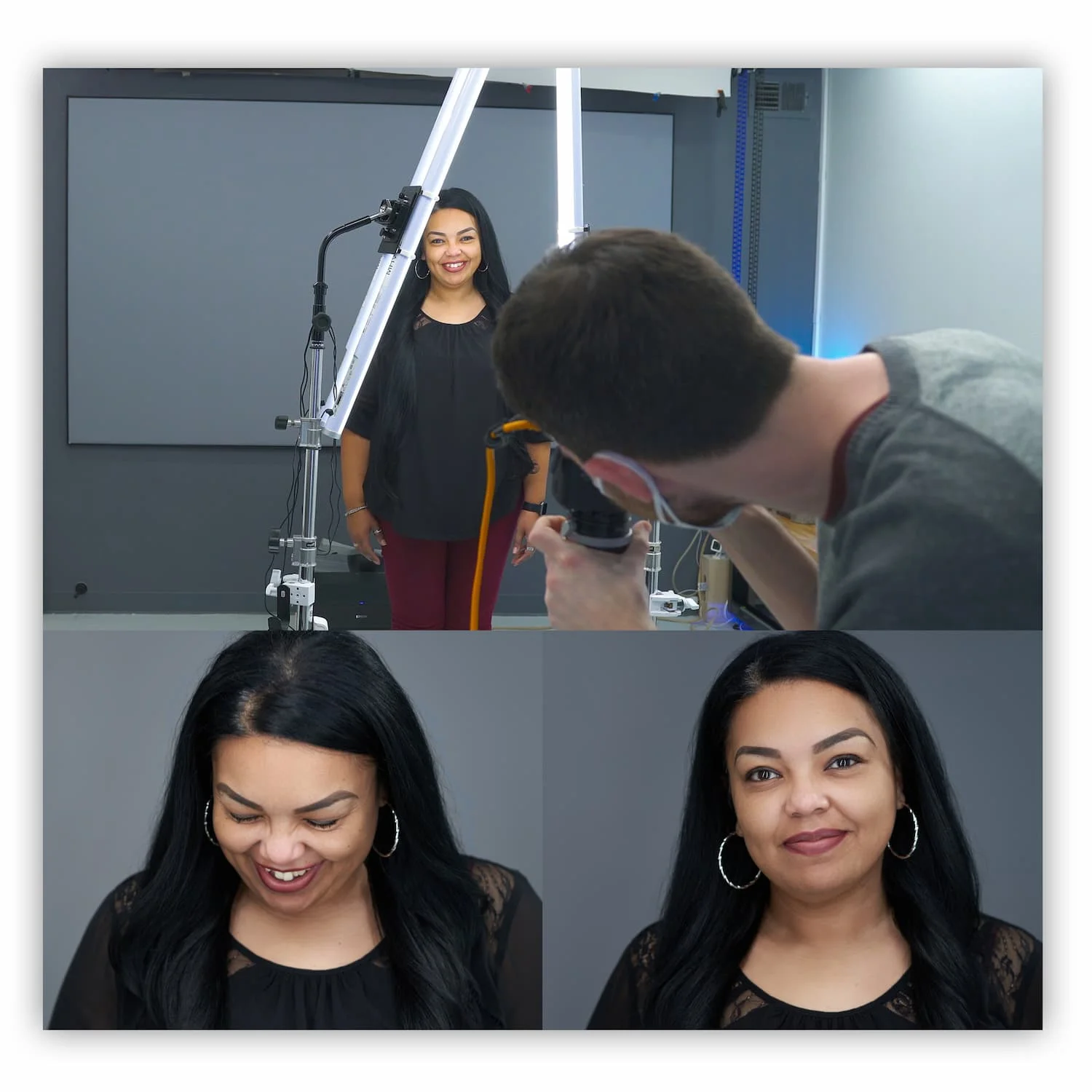
Conclusion: Confidence Comes From Preparation
Being camera-shy doesn’t mean you’re doomed to bad headshots. It just means you’ll benefit from a little extra preparation, a photographer who understands how to work with anxious subjects, and some patience with yourself during the process.
The professionals I work with who feel the most camera-shy at the beginning often end up with the most authentic, confident headshots—because they’ve done the mental work, communicated openly during the professional headshot session, and trusted the process even when it felt uncomfortable.
If you’re feeling nervous about your upcoming headshot session, that’s completely normal. Take a few deep breaths, remember that this is a partnership (not a performance), and give yourself permission to feel awkward at first.
Confidence isn’t about being naturally photogenic. It’s about showing up prepared, staying present during the session, and trusting that the right photographer will help you get there.
If you’re in the Philadelphia area and want to work with someone who specializes in making camera-shy professionals feel comfortable, I’d be happy to chat about your upcoming session. Sometimes just talking through the process beforehand makes all the difference.
Ready to Get Started?
Have questions? Let's discuss your needs and create perfect professional images.